
Sometimes the way we approach the problem might be (a) part of the problem. —Yoruba Proverb
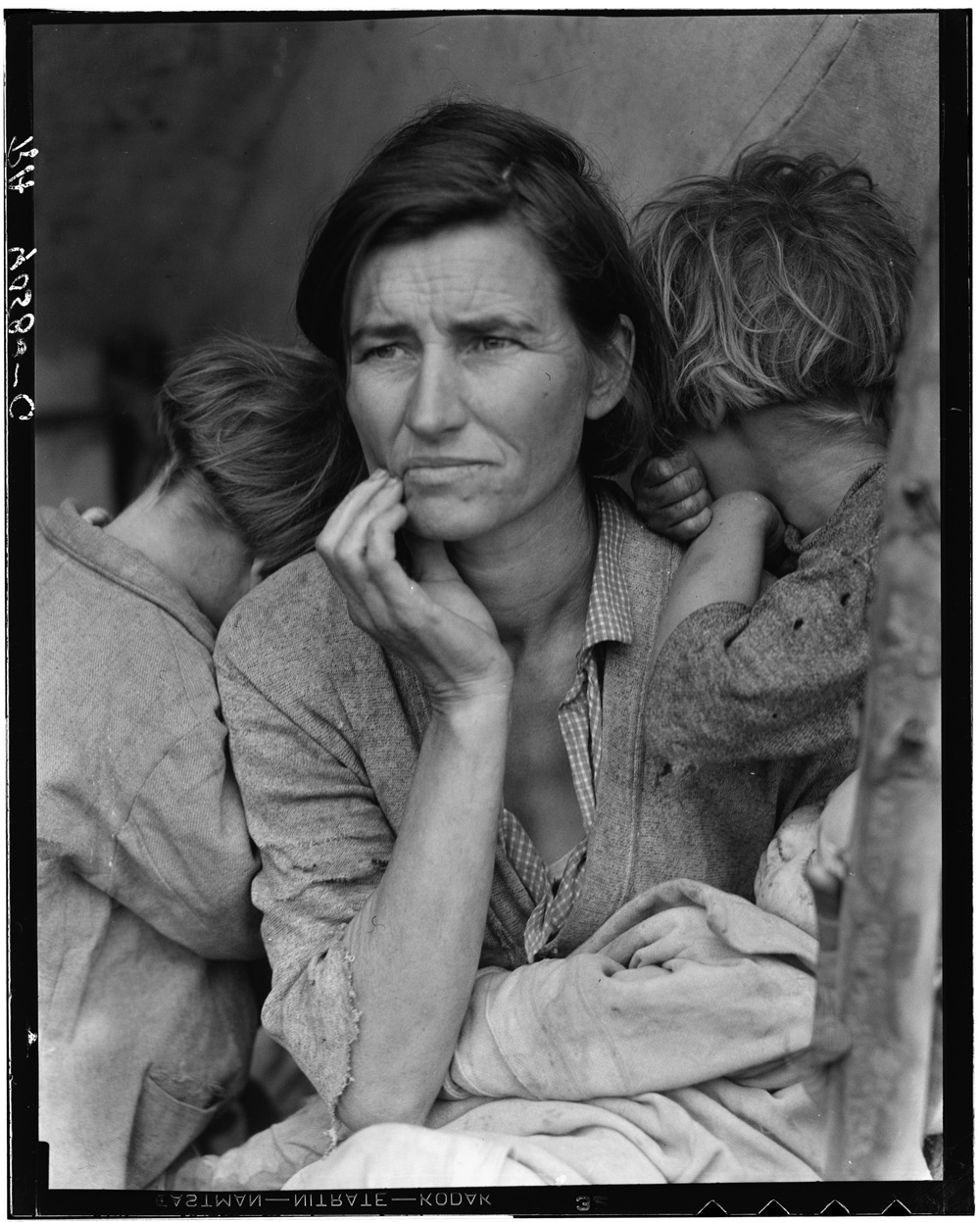
This article shares a blight of connotation with the popular Dorothea Lange’s 1936 viral image of a young mother and her children in a migrant farmworker camp in Nipomo, California, during the Great Depression. (The iconic image is attached as a featured image of this article for perusal, but there is a Copyright guide and Restrictions by Library of Congress, Washington, D.C., 20540-473.). I was ‘blessed’ to the wonderful story behind this picture while interacting with Durham Peters and Cmiel Kenneth through a book they co-authored entitled the Promiscuous Knowledge (2020, p. 149). I am daunted by the fact that his story has its own technology of staring at us via our gadgets’ screens — it is exemplary in the general notion of “never say never.”
I am using this article to experiment with different ways of storytelling. The story of migrant mothers is relevant for us to understand the stigma, excruciating violence, and debilitating physical and mental abuse migrant mothers and children carry in their everyday lives, and that most women in the (ongoing) migratory spectrum have little choice.
Spectacularly, the image of the Migrant Mother synchronized pictorialism with journalism (photojournalism), offering a “pedagogy of the eye” in the 20th century. In 1978, the identity of the image bearer was revealed to be Florence Owen Thompson, who was acknowledged not to be an immortal. “Immortal icons could be ordinary humans,” Kenneth writes. The effect of the aesthetic imperative is to constrain what the original meaning might entail. We saw this in the media several decades ago during the period when documentary photography was emerging.
I am vested in trolling the epiphany of Lang’s image-making in the migratory bodies of refugee mothers at the refugee camps across the world, sacrificing their ‘underwear’ to protect their family. There might be connectivity difficulties, but I believe this is an often-not-discussed issue in our ecosystem. I mean, it is rare to come across a study or exposition that is particular on single mothers who are thriving through the fabric of excruciating pains to raise themselves and their children. Curtis (1986) describes it as a timeless and universal symbol of suffering in the face of adversity. I claimed the above to be the gap in existing literature. Does this article cover such a gap? We shall find out.
To contextualize this article, by the term ‘underwear,’ I do not mean the capitalist perception of underwear as an object that protects the skin, but rather, metonymically, I mean the loss of power, loss of migrancy, loss of will, loss of self and loss of ecstasy. It means bringing to the fore the experiences of Migrant Mothers and the pressure (tension) around raising their children in a transnational or migrant space — away from their original home. Additionally, there is a high rate of female labor exportation from the global South to the North for economic gains. This story never makes the headline.
With no specific case study, this article looks at the question of (i) justice and fairness (ii) poignant and painful experiences of migrant mothers and (iii) how the migrant mothers navigate belongings and kinship—the rudeness and churlishness of the extant consuming layers, whose prior motif is to claim the relations of colonial power inside and outside the refugee camp.
The context of this colonial power raises the notion of ‘care deficit’ and ‘mothers across borders.’ Naidu (2019) implies that relatively less attention has been paid to women who are forced to be mothers in a transnational and foreign cultural context because they have migrated as refugees or in an attempt to look for greener pastures for themselves and their children. The mothers are mostly in their twenties and thirties. However, someone needs to drive this sentiment across space.
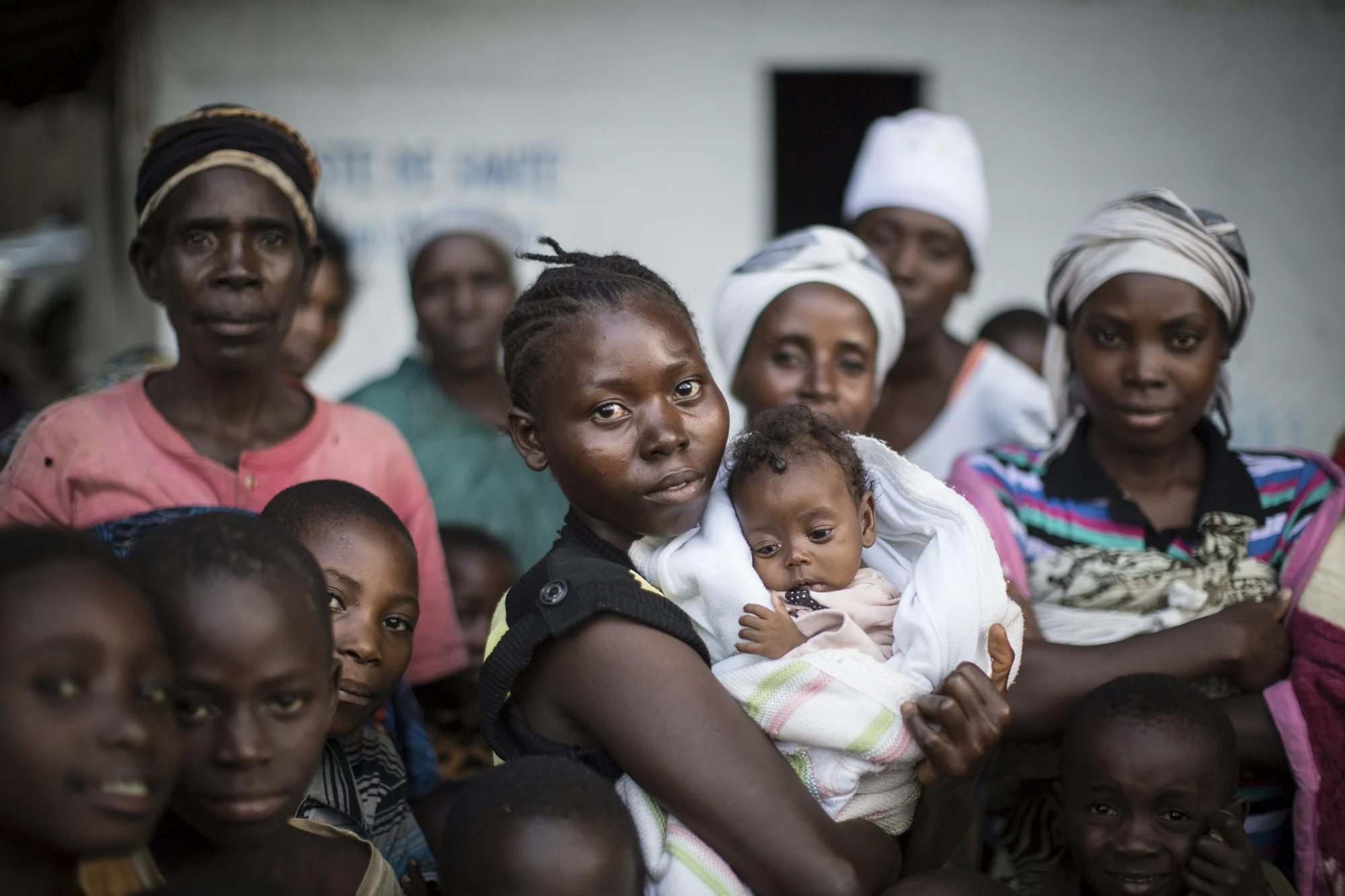
The institutions of migration are differentiated based on regional lived experience. However, I am bent on discussing what Migrant Mother entails from the prism of Eurocentrism, which is the ethos I am exposed to. Florence Thompson was a mother of seven children at the age of thirty-two. A migrant agricultural laborer in Nipomo, San Luis Obispo County, California. I am convinced that by shining our searchlight on the internally displaced persons’ camp (IDPC) in Northern Nigeria, Congo and South Sudan, we would find a replica of Florence’s image — even in more severe conditions. Aside from uncertainty about the scale and scope of comparison, the binding cord on this topic is that Migrant Mothers, either in the North or South, share the same height of injustice and repression.
Migrant mothers share interpersonal relationships with their (isolated) siblingship as a ‘doing refuge’ (taking refuge) and ‘un/making refuge’, which is deeply affected by modernity — in a transient way. This interpersonal relationship has not been harvested to their benefit, I would argue. A Migrant Mother carries the toga of a ‘fifth citizenship.’ I am fervently looking forward to being invited by the managers of refugee camps across the board to interact with Migrant Mothers to distill the mobbing voices and to mobilize an intercultural audience focused on establishing the genre of evidence-based narratives. Their voices and sentiments need to go viral.
Gilmartin & Migge (2015) argue that structural obstacles and cultural understanding of care actively conspire to undermine migrant mothers’ potential to develop place-belongingness. As Geraldine Pratt (2012) noted that creating a public archive of testimony and an avenue for dialogue is, however, not enough. We must create a parliament of public dialogue, so that we can provisionally question the governance of migration, particularly on the politics of women refugees in the light of what Karen Bared called “agential realism.” A reminder that immigration is about the “dynamic interplay of interconnected agencies through the process of inter-action,” and beyond the political and economic, it is also about the vital domains of the everyday articulations of family and family life.
Featured image credit: Art Berlin
Inside image credit: UNHCR/Federico Scoppa
Endnote
- Curtis, J. (1986). Dorothea Lange, Migrant Mother, and the Culture of the Great Depression. Winterthur Portfolio, Vol. 21(1). University of Chicago Press Journal, Chicago. Available at: https://www.journals.uchicago.edu/doi/epdf/10.1086/496257
- Geraldine, P. (2012). Families Apart: Migrant Mothers and the Conflict of Labor and Love. University of Minnesota, Minnesota, pp. xxi. Available at: https://books.google.de/books?hl=en&lr=&id=xIkQgJR9rEYC&oi=fnd&pg=PP2&dq=migrant+mother&ots=9aMeU-Yfkf&sig=y4EqkUIw_NKvZVBttyFwXa_3hPk&redir_esc=y#v=onepage&q=migrant%20mother&f=false
- Gilmartin, M., & Migge, B. (2015). Migrant Mothers and the Geographies of Belonging. Gender, Place & Culture, Vol. 23(2), 147–161. Available at: https://doi.org/10.1080/0966369X.2014.991700
- Naidu, M. (2019). Migrant Mothers: Raising Children in Migrant Space. The Oriental Anthropologist, Vol. 13(1), Sage Journals Publishing, New York. Available at: https://doi.org/10.1177/0976343020130104
- Peters, D., Cmiel, K. (2020). Promiscuous Knowledge: Information, Image, and Other Truth Games in History. University of Chicago Press Journal, Chicago, pp. 149. Available at: https://press.uchicago.edu/ucp/books/book/chicago/P/bo45558255.html
