
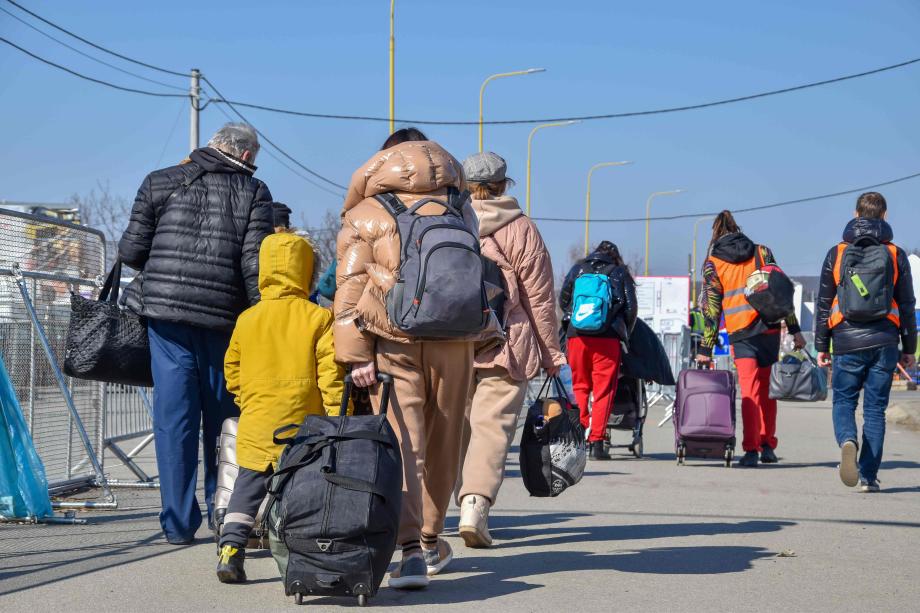
Development Hack: Out of Africa, no Return
By Compassion Chidozie Ogbanu
One announced opinion I have come to terms with is that there are no unified anthropologists’ interpretations of the historical account of the first set of Africans that migrated to Europe. The Americans participated as the receiving agents considering their act of hiding Egyptian wooden and the Benin stolen artifacts in some museums, and the business of slavery that yielded huge profits for European slave merchants. Africans are moving out in droves, wandering into unknown Europe. Migration is the beauty of globalization, and yes, we must see the bright side of every situation. Some European analysts maintained that migration is the ‘dark side of globalization.’
In this piece, Europe will be the main focus since it has witnessed the highest number of migrants from Africa in the 21st century, that is to say, there are different accounts regarding migration from Africa to Europe. For instance, paleoanthropologists like Wolpoff. M. argues that “Humans were not forced, squeezed, or starved out of Africa. It was a matter of opportunity and the evolving human ability to take advantage of it.” The National Geography (1985) interpreted the above quote in the sentence that says – “people first left Africa when they did because they wanted to, because they had to, and especially because they could” (cited in Weaver 1985:608). Wolpoff, whilst vetting his concerns on what looks like Africans are migrating for greener pastures, paid lip service to the inhuman slave history dating back to 1526.
The focal point of slavery and migration is the ambush of colonialism. Colonialism shaped the past and present African identity, and ectopically speaking, will continue to shape the future due to the demise of practical opposing strong values in knowledge production. Currently, the epistemologies from the Global North on the theory of colonialism and migration are arguably winning the debate despite scholars from the Global South depositing African literary cannon on decoloniality, post-colonization, imperialism, and neo-colonization, making headways as critics and repentants. The victory was borne out of intimidation, the contradictions, and complexities of all ‘global actants’ in the social world arena with no valid/accepted definitions.
In my little understanding, colonialism is beyond taking forceful control of others, it means the loss of hope, loss of environment and circumstances, ex-building and ex-bounding human characteristics, creation of unresolvable confusion, loss of identity, loss of trust, and the loss of patronage relations. I interpreted it as being that “thing” that incarcerated/disadvantaged many generations. It is an art drawn from the backside of a dull pencil and eraser. It refuses to answer the clarion call of self-esteem. It denied people their developmental phase thereby taking them behind the hand of time. Colonialism in Africa disrupted many things. It distorted the languages of different ethnic groups and gave them a single language with which to talk to one another.
However, Stanley Henry, writing about North Africa in 1900 did not consider the above submission, he posited that “He (Africa) is still the wild, shy man of the woods or desert, as he is represented to have been in the times of his earliest discoverers. He lives the same precarious existence, in earth burrows, or diminutive huts, preying on insects, ground game, and mudfish, or on what he can steal from his taller neighbors.” This synergizes with the theory from the North about Africa being a “dark” continent. Stanley’s work provides a certain knowledge of Africa. It appropriated Ah-Africa (in metaphor) as an uncivilized dog that eats horse food.
There are emotions in studying ourselves and our relationships with society. The first colonizing population was probably small which made it easy to achieve “divide and rule.” To some extent, the increasing population (young people) in Africa in the recent dispensation does not correlate with the scarce resources that have further expanded the ladder of migration. According to forecast, Africa’s total population will reach nearly 2.5 billion by 2050. On the other hand, due to the appearance of the aging population, Western powers who serve as “gatekeepers” are romanticizing the weakness of the ‘other’ by opening an intrusion gateway for skilled workers to migrate with pristine offers. Whilst these offers last, Africans are treated like fugitives in the fast-growing capitalism and industrialism.
 This is the invisible modus operandi, the sine qua non for hacking the development of Africa, technologically, politically, socially, economically, and culturally. African leaders who served as shepherds and herdsmen are watching in akimbo as the mass exodus of her youthful population is relocating to Europe through regular and irregular means, and through kinship are making ways for others to join, and (Parks 2007) secure the continued flow of remittances. The aftermath was a migration crisis at the borders. Soon, I am afraid that there will not be skilled personnel in many sectors left at home to help develop Africa. The balm in the Gilead is almost finished.
Western Europe is prodding African skilled manpower for its wider interest while the opposite is emerging. It is true, as Roderick Parkes noted in his brilliant article “Out of (and inside) Africa: Migration Routes and their Impacts” that between 1989 and 1994, an average of 480,000 asylum-seekers lodged their claims in Europe each year, reaching a peak of more than 600,000 in 1992. While this was a major shock to the EU, the impact on its foreign policy only gradually became clear. The EU needed time to turn its immediate reaction to the crisis into a more systematic engagement with the geopolitical drivers of migration. Between 2014 and 2016, more than half a million people crossed the central Mediterranean to Europe, moving from the Horn and West Africa through Libya, Egypt, Tunisia, and Algeria. These flows are again fundamentally challenging European foreign policy and its setup (). This is a testament that whoever crosses the fleet either through Sub-Sahara or North Africa never returns.
In conclusion, geopolitics which includes the friendliness of foreign policies of nations is on an imminent shift. Rather than renovating the old foreign policy of master-servant relationship, the current lodge of the African Union leadership is making new cases for equality in terms of power relations in international trade negotiations, and I had hoped the issue of migration would be discussed at the front burner, for the achievement of a win-win situation. Emphasis on brain drain would be more grievous than brain gain. The European Union (EU) which is the umbrella for the European countries must engage mostly West African countries and increase investment opportunities which will automatically stimulate incentives for local manufacturers. Once the incentives are spread across countries, the poverty level will decrease, and migration will be mitigated.
Image credit: Roman Vlasenko
