
In this brief, it is by design that the concept of Brown-Roofing politics in texture and abstraction precedes the promissory note. It can be harnessed through the philosophical operation of the Others (phenomenology and poststructuralism) while negotiating with the Self. Promissory(-ies) in classical scholarship have been terraformed by modernism to massage the evasive phenomena emanating from post-truth and feminist ideologies. In this brief, I introduce a hypothesis to make sense of the unidentifiable variations established somewhere, known as the Brown-Roofing politics (BRP). I will use the abbreviation BRP for Brown-Roofing Politics in this work.
Fyodor Dostoyevsky used the term, promissory note, in The Idiot (1868) to pathologize family inheritance in melancholic agitations. This, in my own sense, is how the literature of the classic period permitted the facets of promissory. From the Afro-optimism and necropolitics lens, Achille Mbembe, in his Provisional Notes to the Postcolony (1992), identifies specifically a given historical trajectory of the society recently emerging from the experience of colonization and the violence that the colonial relationship, par excellence, involves. To be sure, the Postcolony is chaotically pluralistic, yet it has nonetheless an internal occurrence.1 These two texts communicate an understanding that helps us to make a case for BRP — for asylum seekers engaging discursively.
Before elucidating this discourse, I would like to observe that the term politics in the sense of this work is contrary to the general meaning of politics as “the struggle for power” and the “process of man governing itself”- definitions made available by Western epistemologies. There is no quandary with that. Here, I refer to politics as the “way people relate (network, assimilate, play, culturize, entertain) with each other, including their relationship with what we rudely call non-living things. It also means the familiarization of phenomena in a worldview that maintains a close relationship with the indigenous and diasporic bodies. Politics, here, means the entanglement between nature and ‘unnatural’ through spatial connivance. For example, metaphorically, while sitting on a seat, the interaction that goes on between you and the seat is classified as politics. Only you can tell what happens to your body system when you are comfortably or uncomfortably seated
In this brief, I will focus on West Africa and how the Brown-Roofing politics is predominantly featured in the region politically, economically, socioculturally, and even technologically. In this work, I will use West Africa to hypnotize the breadth and length of the concept, through the dual interaction of variables such as politics vs polity, economic vs theatrics, monopoly vs monopsony, unity vs division, oversimplification vs concise, superiors vs subordinates, police officers vs citizens, territorialization vs deterritorialization, foresight vs hindsight, blackmail vs whitemail, in-formation vs de-formation, inter-action vs inter-reaction, repression vs liberation, prison vs freedom, determinacy vs indeterminacy, holistic vs puritans, fugitivity vs monstrosity, statehood vs civil society, anachronism vs solecism, imbrication vs monotheism, government vs people, technology of racialization vs allocation of state-resources, culture vs semiotic, un-making vs shapeshifting, election vs autocracy, etc. All these pairings signify that BRP is living in a double-edged fate.
This thesis intends to engage discourse that comes from hidden places and to take a ‘mature’ risk by asking the uncomfortable question of why poverty is prevalent in West Africa. While it is comfortable for those interested in this topic to blame the colonial administration for purposely impoverishing the region, the reason why I am interested in the dot that connects poverty and prosperity in West Africa is because of the olive branch extended by the BRP. Yes, the BRP empowers us to discuss, for example, why “there are houses with bizarre brown roofs” in the region. The onus is that the brown roofing represents poverty. Hey! Don’t mix things up; BRP could be extended beyond West Africa. Some quarters declared Africa’s poverty systemic. In the sense that corruption is the mainstay. Well, I disagree with this position. Corruption is local and international. Then, if so, we should look for something else. The BRP abhors a single paradigm while searching for explanations. This is not a joke.
Of these fabulations, functions, characteristics, and political genealogies, BRP can be used to facilitate the prerequisites for asylum. It is that which describes Africa as a successful example of a space that is reliant on the world, not apart from the world. Recycling the wand from the period of Apartheid to the liberation movements, the principles of brown-roofing have become the “foster child.” I am not a prophet or a soothsayer; however, an era will come when the region attempt to ‘stand on its own.’ This was how the other places known as success became successful — they stopped reacting and crafted plans that set them ahead of others. Have you seen that BRP offers this kind of behavior, most especially as it concerns progress?
In my curating promissory note, I described myself as a ‘recovery learner’ and emerging ‘side-chic’. I devised these god-like phrases through candid reflection and the analogy of innocuous expectations. I focus on the abysmal, animalistic, and debasing inclinations to filter the simulacrum of developmental drive to question the persistent poverty in Africa. I challenge the unseen fractures that rigid the spiritual and physical amulet in the continent.
Africa, as a case study from the nodal point, I chalantantly show how the ‘uncommon-good taste’ (preponderance of the natural resources) has not been replicated in the bodies of the asylum incorporation – these are people whom the state apparatus was meant for – to serve, to protect, to govern. They deserve something holistically purified more than the brown-roofing caricature purported by the ruling bodies.
Hypothetically, the representation of Africa using the picturesque of brown roofing as a political infrastructure signifies a continent not aware of her might, whose GPS was snatched from and beyond, then having no magnus carter of some sorts to track her journey any longer (attributing human-like to it) and then lost her way. She has turned against herself through the instrumentality of sheer foreign and indigenous elitist power’s collaboration. The resultant effect is in the mutual zombification of both the dominant and those whom they apparently dominate. This zombification meant that each robbed the other of their vitality and left them both impotent,4 distilled, and lacking the gospel to confront extreme vexation.
It is rare to remark on the conceptual market of Africa without reference to the military junta, militancy, ethnic crisis, and the Apartheid regime that distorted the syndrome of the ‘catch-up’ archetype, which incompletes the ascension of the region to the ‘First World’ categorization – a Western advocacy. The military governments in various African countries were (visibly and invisibly) introduced by brute force into the fabric of the society shortly after securing ‘nominal’ independence from the colonizers, which questioned the ‘preparedness’ of the hierarchical political leadership on the continent.
From the barrel of guns reigned illegitimate ‘order’ and ‘silence’. The men on horseback backwarded the hand-clock of civilization. The takeover of government by the liberation movements and the lackluster leadership aptitude that surfaced made the Brown-Roofing suspicious of the quality of apprentices the political leaders acquired: half-baked apprenticeship that produced leaders with no intellectual acumen to stir directives. It metamorphoses into a bizarre corruption. Let us assume they are intellectually capable of managing the affairs of the newly independent states, the resultant effect is a fiasco.
Even in France-Algeria and British-South Africa where the “wisdom of Solomon” circulated to some districts using the temperament of the White bodies, the Brown-Roofing rejuvenated immediately after the independent states surfaced and became the horse-trading of every home – to the Natives as a form of resistance and to deconstruct some regimes of oppression, dominance, and repression. The intentions of the political leaders of these nations at this age have shown a brute implementation of the brown-roofing politics supported by the pseudo and imperial ‘Whiteness’ ever present in every affair of the newly independent countries in Africa – they, also find it difficult to guarantee autonomy.
During the agitation for self-determination in Africa, the founding fathers fought the armed colonial powers with bare hands and won, but what they did not realize was that the indignation of the Brown-Roofing had become the agent of segregation and abuse. Gradually, the Brown-Roofing became a psychological hormone. After the end of the liberation movements, the freedom fighters and activists realized that they had flags, their names had been changed to the colonizers’, and artificial borders and fences had been constructed on their lands to infuse demarcation and to distance families and friends, setting them up against each other – neighbors became conscious of their land borders than saying greetings to one another.
Psychologically, they started identification by race, ethnicity, and religion as a means of separatism and stratification. Zombification became the chief driver for ethnic profiling and hatred. The algorithm of abuse was further deepened because of the tooling for power. These are evidenced in xenophobia occurrences in South Africa (2008), Mau-Mau Uprising (1952), Shifta War (1963), Rwandan Genocide (1994), Nigeria’s Civil War (1967), etc.
With the installation of the technology of identity, the GPRS in some cities in Africa beams the visibility of the brown-roofing construction indicating from the top (i) a long history of multi-dimensional poverty overstretched by the elite groups through the deprivation of state resources consciously, intentionally, and semi-consciously (ii) immense disdain for modernization (iii) conflict of policy expectations from the people (iv) manipulation of events (v) and the telling capturing of the state by agents of the Postcolony. These are the discoveries of Brown-Roofing.
Furthermore, since I am facilitating the ideology from the face value standpoint, this article lacks the nuances of implicitly evoking the critical role of theology (early missionaries inclusive) perpetrated over the decades in the annals of asylum seekers whose identities are questioned, occasioned by the loss of Self. However, this facilitation was meant to avoid distortion of perception from the readers and close the gap for persuasive enthronement.
Extractivism and progressive dissimulation are among many others the factors of the Brown-Roofing politics for the asylum, it replaces inclusivity, diversity, equity, and justice by adhering to the ethos of anarchism which proposed a ‘strong-man’ kind of politicking orchestrated by the bogyman and cohorts, mostly aggregated in the 21st century of West Africa. They hold a grip on power and are likely to go to the grave with it.
Brown-Roofing politics is neither a mastermind of forgery nor an unwanted regime ruled by the sword, even not the adversaries to reality. It is the occurrence of the Most-High, the yet-to-be-known power, the pacing of consciousness, and the feministic approach to emergence. Most of the elites, either in the business of governance or not, quickly camouflage the cyclicity of morality to commercialized power as a personal commodity, abusing the common voices – voices writ large.
We have seen the elements of the Brown-Roofing politics in the atrocious convoy of sirens in the streets of Kumasi, Lagos, Bamako, Bissau, Conakry, et cetera, idolizing their appearance in the sight of the observers. “Artistically expressing that mankind has become too noisy and unproductively industrious, with no spiritual calm.” Since Brown-Roofing shows the poverty-stricken populations in Africa, there is nothing aesthetic about its processes.
I lean on the chalice of fragile symbiosis to re-map the timeliness of the Brown-Roofing representation as the affording material that antagonizes the status quo and recognition of the crucial roles for retribution converged in the shared rhetoric5 of West African scholarship. In acknowledging the existing anecdotes, nobody has approached this contribution from the perspective without losing the thread of arguments – without losing the voice and humane lofty idea – without losing temporalities. Here we are, reminiscing on the brown-roofing politics just to ajar perfect with perfection.
To rethink Africa is not rigorous, political, ethico-moral, respiratory, ontologically sensational, and an intellectual project. I have said this in the past, and I am repeating it once again in this article: what makes the rethinking of Africa frivolous is the “impeding constitutional psychology facilitated by a colonial mentality that demobilizes citizenry from staging a comeback and placing capitalism ahead of communalism.” Well, Africa’s indebted Bodies do not correlate with any of these ‘isms.’ “It is common these days for people to say, ‘I put no faith in – ‘ism.’ I am not convinced by them. What I feel is …: the thread has no dot (emphasis added).
In the early 1950s, resistance and innovation towards self-rule were prevalent in some African countries which, before 1980, led to the eschewing of the ‘foreign rule’ but not in its totality. What transpired was that (again, by design) the baby was thrown away rather than the bath water. Observants of the Brown-roofing politics rejected the bid for resistance; for them, there was no resistance in the 1960s despite noticing the “planet moving towards Africa.” Their excuse was that Africa was densely visible to be reconciled with by the global body. Posing the question of the global perception of Africa as a “Second-class citizen.”
Locking Up the Experiment
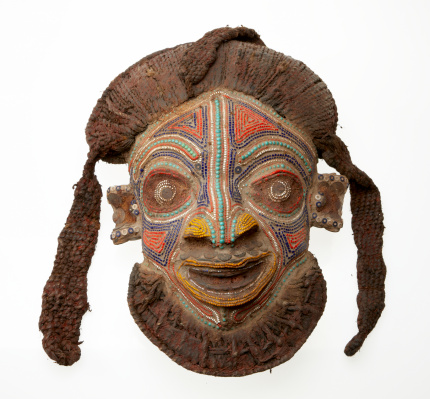
Reflectively, brown-roofing is experimented on layers, such as ethnic ‘particularism, ’ clinical politricks, judicial infringement, social consciousness, mass media, and the crisis of language (“until we resolve this crisis of language and social consciousness, we won’t be able to bring Africa back to life”). The thinking of Brown-Roofing “builds these insights while searching for alternative acts of survival: exploring other ways of speaking; taking seriously the visual, sounds, the senses, and thinking as philosophically and historically as possible about the precariousness of life in Africa; the interface of power; and the various ways in which events coexist with accidents (see Jesse Weaver Shipley, Jean Comaroff and Achille Mbembe, 2010).6
Africa is complex and dynamic; no history lesson can redesign its paradoxes. Ethnic labeling and tribal identitarianism have become increasingly questionable as the means of locking up the experiment, signaling a deep sense of inseparability of political powers from the real bearers of legitimacy. Tribal affiliation is likened to a cult syndicate where ‘outsiders’ are not given a place at the table until negotiations are archived. It has become a norm, “crumbling under the weight of famine, poverty, inertia, and political stasis.”
Africa as a name, as an idea, and as an object of academic and public discourse has been and remains fraught. It is fraught even in ways that go beyond the paradigm of orientalism introduced by Edward Said (1978) to speak to the staging of the difference between the non-West from the West. Africa is not only perpetually caught and imagined into a web of differences and absolute otherness.7
Brown-roofing politics (BRP) surrenders power to capitalist order to make the image of the world – as capitalism triumphs to collect power from the coast of democracy. As seen in the first paragraph of this journal, the allegory of the Other and the alternative Self, we can see the close dynamism inherent to this sort of collaboration that seeks some aspects of that juxtaposition. A reflection of the ultimate, idealized notions of territorialization and deterritorialization contributing vastly to new forms of questions by brown-roofing politics.
To conclude, a few words of caution and hesitation are in order. These paragraphs are fueled by a deep sense of curation and historical determination qualitatively soiled to harness the new version/vision for the asylum seekers who are arduously romanticizing the architecture of the brown-roofing, knowingly and unknowingly. We cannot totally blame the asylum seekers for doing this. To forge continuities of relevance within the past and present. BRP is fluid, “nonhierarchical and nonreductive; that is, it does not try to impose a universal value system,” but it questions the repetitive brown-roofing architecture present in most communities in Africa – acting as an agency.
Beneath the great continuities of thought, beneath the solid, homogeneous manifestations of a single mind or of a collective mentality, beneath the stubborn development of a science striving to exist and to reach completion at the very outset, beneath the persistence of a particular genre, form, discipline, or theoretical activity, one is now trying to detect the incidence of interruptions. Interruptions whose status and nature vary considerably.8 Brown-Roofing politics do not attempt to offer philosophical and aesthetic inquiry, rather it offers a way of ‘being’ and dissolute presentism in the frame of what the continent of Africa is and what we are told it should be.
To be continued…
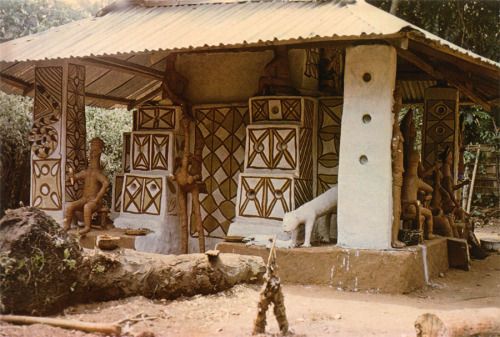
Image: Mbari-House (Source-Ileri, 2022) via iStock
End Note
- Mbembe, A. (1992). Provisional Notes on the Postcolony. Cambridge University Press, Vol. 62, No. 1, pp. 3-37. Available at: https://www.jstor.org/stable/1160062
- van Dijk (1990). Social Cognition and Discourse. Department of General Literary Studies, University of Amsterdam, The Netherlands, 166. Available at: https://discourses.org/wp-content/uploads/2022/07/Teun-A.-van-Dijk-1990-Social-cognition-and-discourse.pdf
- Eysteinsson, A., & Liska, V. (2007a, 2007b). Modernism. John Benjamins Publishing Company. Amsterdam/Philadelphia, Vol. 1, 545 – 563 – (3,4,5).
- Weaver, J., Comaroff, J., Mbembe, A. (2010). Africa in Theory: A Conversation Between Jean Comaroff and Achille Mbembe. The George Washington University Institute for Ethnographic Research, 653-678. Available at: https://www.jstor.org/stable/40863671
- Mbembe, A., Nuttall, S. (2004). Writing the World From an African Metropolis. Public Culture, 16(3), 348-9. 16
- Foucault, M. (1972). The Archaeology of Knowledge. Pantheon Books, New York, 4.
Compassion Chidozie © 2025
